
Crimes involving the deaths of children are gut-wrenching enough, but when the murderer is the children’s mother, things become downright horrifying. This week’s post is about a crime of this nature. In 1997, a jury convicted Darlie Routier of fatally stabbing her two sons in their Rowlett, Texas, home.
Darlie Routier Reports a Crime
Rowlett is a usually quiet suburban bedroom community located northeast of Dallas. However, that changed on the morning of June 6, 1996. In the early hours of that day, Darlie Routier, then 26, placed a 911 call from her home. She told dispatchers that an intruder had broken into the house and attacked her and her sons. Officers from the Rowlett Police Department responded and found 6-year-old Devon and 5-year-old Damon with fatal stab wounds. Damon appeared to be still alive when paramedics arrived but succumbed to his injuries shortly thereafter. Routier herself had suffered a cut to her throat and superficial injuries to her arms.
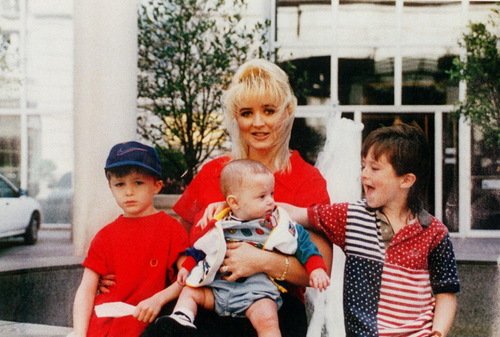
Initially, authorities followed standard procedure in a suspected home invasion. They cordoned off the house and began collecting evidence. However, investigators soon noted inconsistencies in Routier’s statements and discrepancies with the forensic evidence at the scene. Some of the questions involved the timeline of events, the location of bloodstains, and the apparent lack of forced entry.
Darlie Routier Becomes a Suspect
One of the pivotal moments in the case occurred when investigators reviewed footage of a birthday party held at the Routier home just eight days after the boys’ deaths. The gathering, which included balloons, a “Happy Birthday” banner, and Routier spraying Silly String near her sons’ graves, drew public criticism. Later at trial, prosecutors cited the videotaped celebration as evidence of a lack of remorse. Routier’s supporters, however, argued that the state took the footage out of context. They noted that it followed a more solemn memorial earlier that day.
Detectives increasingly focused their suspicions on Routier as the investigation progressed. In June 1996, police arrested her and charged her with the capital murder of Damon. Although prosecutors only charged her with one murder, they later said they believed she was responsible for both deaths. The state chose to pursue charges for only one of the murders. This strategy allowed them to seek the death penalty without the risk of additional acquittals.
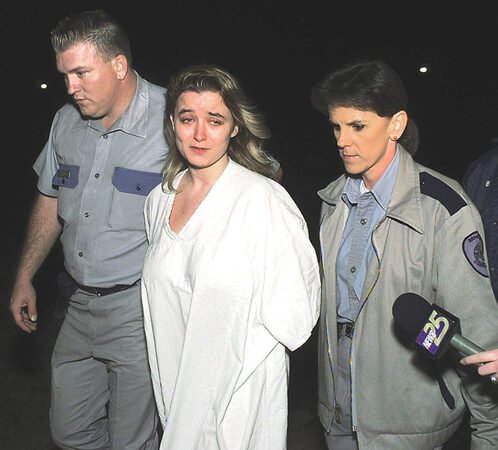
Darlie Routier Tried and Convicted
A change of venue moved the 1997 trial to Kerrville, an hour northwest of San Antonio, due to extensive pretrial publicity in Dallas County. Prosecutors argued that Routier had staged the attack and self-inflicted her wounds in an attempt to create the illusion of a break-in. They presented forensic evidence, including blood spatter analysis and fiber evidence, suggesting that someone had manipulated the crime scene. Testimony indicated that a bread knife from the Routier kitchen had fiberglass fragments matching a cut window screen, which contradicted her claim of an intruder breaking in through a garage window.
The defense argued that the state built its case on circumstantial evidence and flawed forensic analysis. They pointed to the lack of a clear motive and emphasized Routier’s injuries, which they claimed were inconsistent with her inflicting them herself. Testimony from family members described Routier as a devoted mother who had been struggling with postpartum depression following the birth of her third child. (Note: The prosecution does not have to prove motive, or even suggest one, to get a murder conviction, but it helps.)
After several weeks of testimony, the jury deliberated for less than ten hours before finding Routier guilty of capital murder. She was sentenced to death and has remained on Texas’s death row for women ever since. Routier continues to maintain her innocence, and her case has been the subject of ongoing legal appeals, as well as periodic public interest.
Efforts to Get Darlie Routier a New Trial
In the years following her conviction, Routier’s defense team has sought to introduce new evidence, including updated DNA testing, in efforts to secure a new trial. The Texas Court of Criminal Appeals has allowed for some post-conviction testing, though none of the tests have been conclusive. While technological advances have transformed forensic science, revisiting a conviction from the 1990s remains a complex and lengthy process.

The Routier case continues to evoke strong reactions from both supporters and skeptics. For some, the conviction represents a just outcome based on a thorough investigation and due process. For others, lingering questions about the forensic evidence and the possibility of confirmation bias raise concerns about the reliability of the verdict.
Epilogue
At its core, the case is a tragic one: two young children lost in a violent attack, and a family irrevocably altered. As Darlie Routier remains on death row, legal efforts continue in the background, with motions, appeals, and forensic reviews ongoing. The case highlights some of the complexities of capital murder trials, particularly those that depend heavily on forensic interpretation and circumstantial evidence.
Darlie Routier remains one of seven women on Death Row at the Patrick O’Daniel Unit in Gatesville, Texas. The state has not set an execution date.

You can read more about the Darlie Routier case in Precious Angels: A True Story of Two Slain Children and a Mother Convicted of Murder by Barbara Davis. This book painted Routier as guilty and details the prosecution’s case. Davis has reportedly revised her opinion over time, although she has not published a new edition of the book.
W.G. Davis has produced two books, Bloodstained Justice and Just After Midnight, both of which present the defense side of the case. So does A Texas Style Witch Hunt: Justice Denied, by David Pietras.
Kathy Cruz takes a more critical approach to the case in Dateline Purgatory.
Don’t Miss Out! Subscribe to the Newsletter
Subscribe to True Crime in the News, a monthly email newsletter that examines recent news stories of interest to true crime enthusiasts. The newsletter also summarizes the previous month’s blog posts. You won’t want to miss this. Join the newsletter mailing list today.
How does the prosecution figure a bloody sock found 75 yards up the back alley got there in the time frame allowed?
How does a superficial would cause the blood loss of 50-60% of blood and this is a fatal amount of loss?
When the doctor said superficial to the carotid artery that does NOT MEAN a minor wound. It means next to and not touching. Did the prosecution explain this to the jurors?
Never for one MINUTE believed this woman killed her children, due to the very facts you outlined. There was a rush to judgment, perhaps because of a silly act by Darlie, at her son’s graveside.
This woman deserves a new trial where this evidence can be expounded upon by experts.
She’s guilty. Her husband helped her stand in the kitchen and carefully cut herself in attempt to look like a victim, yet one of her boys were stabbed so hard it chipped the concrete slab under the flooring. If the “intruder” wanted her dead, he would have used the same brutal force and killed her in the same overkill manner as the kids, and would have brought his own weapon and not cut the window screen from the inside out instead of the outside coming in–like a dumb ass trying to stage a crime. ANY cut to the neck is gonna be close the arteries and veins, since they’re close to the skin, you can even see them in most people and will sometimes stick out if strained. A paper cut would be millimeters near veins and arteries.
Why leave one son alone? And why would her husband help?
I always felt the children’s father should have been thoroughly investigated as well. I haven’t seen any mention of an investigation into him. If Darlie was screaming and yelling for her husband, why didn’t he hear her while the attack was occurring? He remained upstairs until just before the first responders arrived. I honestly believe they were both involved . But, yes I do believe she was rightfully convicted.
In the hospital police photos, the cut to her neck was a significant one millimeter from her carotid artery with major blood loss, and she was literally beaten to a pulp -black and blue (mostly black). There is no way that she did that to herself, plus the bloody sock found in the alley. That is so stupid. Just because she was trying/attempting to bring a happy vibe with silly string and brief smiles and laughter in a celebration mini collaboration at the graveside of her dead baby’s birthday with her family does not in any way, shape, or form mean that it was sinister in nature. Give this woman a new trial, or better yet, her family should contact Donald Trump for a pardon. This is very poor detective work. Shame on the Texas justice system for personally judging this young, innocent mother and putting her on death row. They are beyond despicable.
The President of the United States can issue pardons only for federal crimes, not for state crimes, which this one is.
I always thought the husband was behind it and she had nothing to do with it it’s just so so sad
I know everybody wants to argue for her to have a new trial. But I have a lot of unanswered questions. Like how could her husband sleep through a brutal attack of his entire family under his roof? Why wasn’t her injury as brutal as the boys’ injuries were? Why would the attacker use a weapon from the house instead of bringing his own? Why if her husband failed a polygraph exam wasn’t he investigated by the police as well? Is Darlie innocent? I can’t say for sure but what I can say is there are too many unanswered questions that need to be answered. This case needs to be reopened and reevaluated because maybe some things could have been overlooked.