
Today’s post features the Battle of Barrington. This 1934 shootout between gangster Baby Face Nelson and two FBI agents left the two agents dead, but also ended Nelson’s career of crime. It further heralded the twilight of the so-called “Public Enemies” era.
In the American Midwest in the early 1930s, while the country suffered from the worst of the Great Depression, several infamous criminal gangs rose to prominence. Newspaper headlines and cinema newsreels regularly featured names like John Dillinger, Pretty Boy Floyd, Machine Gun Kelly, and Lester Joseph Gillis (a.k.a. George “Baby Face” Nelson). Local police and even the nascent FBI seemed unable to put a stop to these so-called “Public Enemies.” As 1934 approached its end, the Division of Investigation (rechristened the Federal Bureau of Investigation on March 22, 1935) began to gain the upper hand. Their victories were not without cost, however.
The Battle of Barrington: Background
The man at the center of the Battle of Barrington was Lester Gillis, better known by the alias George “Baby Face” Nelson. Nelson was a career criminal who seemed to take a psychotic pleasure in killing. He gained infamy for participating in multiple bank robberies and violent clashes with law enforcement throughout the Midwest. He was an associate of John Dillinger and other criminal figures from the “Public Enemies” era. Nelson had eluded capture for several months following Dillinger’s death in July 1934. Now, at the end of November 1934, his luck ran out.
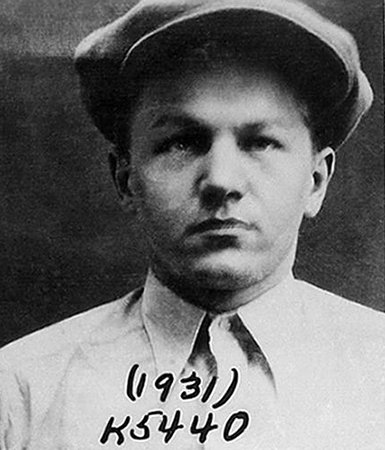
The climactic clash between Nelson and the FBI occurred near the Chicago suburb of Barrington, Illinois, on November 27, 1934. What began as a quiet, cold Tuesday ended with two FBI agents dead and the notorious gangster fatally wounded. The running gunfight marked one of the most significant and violent encounters in the Bureau’s early history.
The Battle of Barrington Unfolds
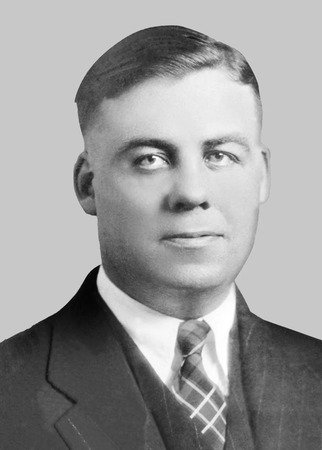
Events that led to the gunfight began earlier in the day, when federal agents received information suggesting Nelson might be in the area northwest of Chicago. Two agents, Inspector Samuel Cowley and Special Agent Herman “Ed” Hollis, were among those assigned to track and apprehend him. That afternoon, they spotted Nelson driving with his wife, Helen Gillis, and associate John Paul Chase near the town of Fox River Grove. Federal agents began pursuit, initiating a series of events that quickly escalated into a running gun battle.
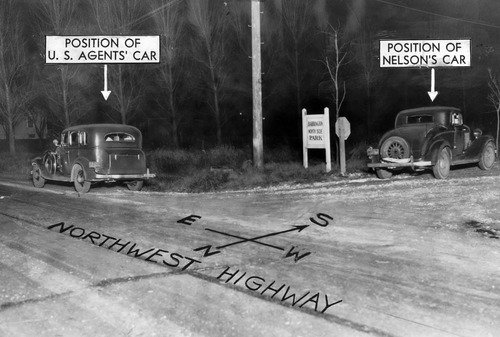
A brief car chase followed westward along U.S. Route 14 into Barrington. Heavily traveled today, at the time, it was a quiet rural road. Cowley and Hollis pursued Nelson in one car, while Agents Thomas McDade and William Ryan followed in another. The chase came to a halt near the entrance to North Side Park, a grassy expanse just outside of the downtown district. There, both parties stopped and exchanged gunfire again.

Nelson got out of his car with a .351 Winchester rifle, and Chase armed himself as well. Overmatched in firepower, Agents Hollis and Cowley nevertheless returned fire with their service weapons, ducking behind their vehicle. Witnesses later recalled the sounds of gunfire cracking through the otherwise still air, and the shouts of the combatants taking cover and issuing commands.
The Battle of Barrington Concludes
Nelson fought fiercely despite being outnumbered. He was hit multiple times early in the exchange but continued to attack. During the shootout, Agent Hollis was critically wounded. Cowley managed to maintain his position and continue firing until he, too, was mortally injured. Nelson, his severe wounds notwithstanding, approached the federal car and reportedly fired the fatal shots into Cowley before fleeing the scene with Chase and his wife.
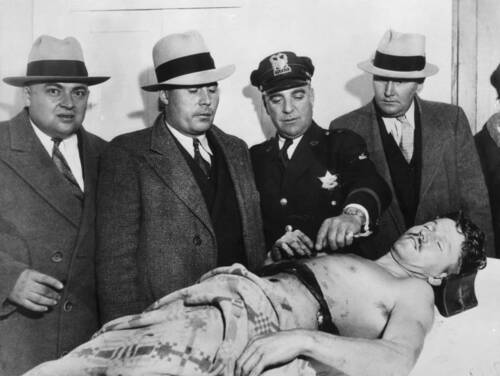
Chase helped Nelson back into their bullet-riddled car, and the three drove away, leaving behind the two stricken agents and a crime scene littered with spent cartridges. Witnesses provided conflicting accounts of the sequence of events, but the battle, which lasted several minutes, left an indelible mark on the local community.
Nelson died from his wounds later that night. His body was found wrapped in a blanket and left near a cemetery in the Chicago suburb of Niles Center (now Skokie). Helen Gillis later surrendered to authorities. Chase managed to evade capture for some time but was ultimately caught and arrested.
Aftermath of the Battle of Barrington
The deaths of Agents Cowley and Hollis shocked the Bureau. Both men were regarded as experienced and committed law enforcement officers. Their loss highlighted the dangers federal agents faced during an especially violent era in American criminal history. The Bureau began placing new emphasis on training, investigative rigor, and armed response. But the Battle of Barrington served as a reminder of the risks involved in confronting heavily armed fugitives.
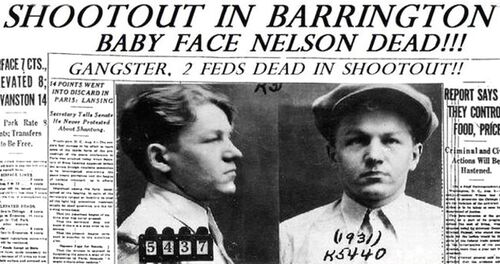
At the time, Barrington was a modest village of just over 2,000 people, unaccustomed to such violence. Residents gathered near the site in the hours and days following, observing the bullet holes in road signs and fences. Newspapers across the country picked up the story as well, further cementing the battle in the public’s mind.
Epilogue
Barrington marked the end of Nelson’s criminal career and was a turning point in the campaign against the era’s most notorious outlaws. Within a year, the so-called “Public Enemies” period would largely come to a close, as most high-profile figures were captured or killed. Concurrently, the FBI’s authority continued to expand.
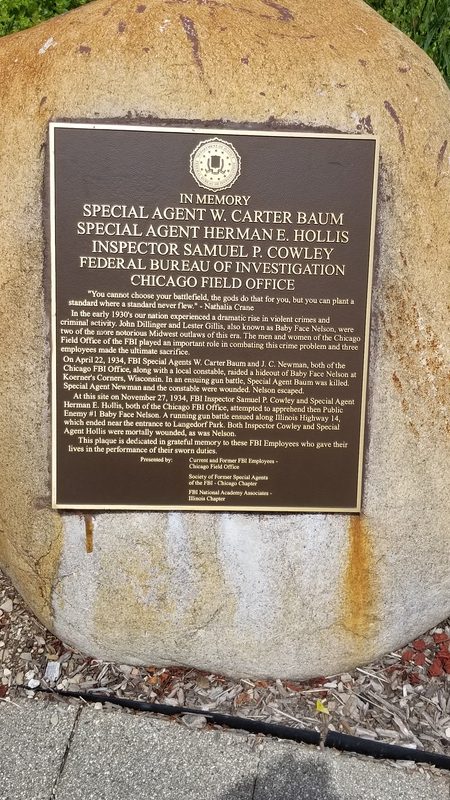
Nearly a century has passed since the Battle of Barrington, but it remains a notable chapter in the story of American law enforcement. A small plaque today marks the site of the shootout, honoring the memory of the two agents who lost their lives in the line of duty.
Many authors have written about the events and players of the “Public Enemies” era. The absolute best, in my opinion, is Bryan Burrough’s Public Enemies: America’s Greatest Crime Wave and the Birth of the FBI, 1933-34. You can also check out Baby Face Nelson: Portrait of a Public Enemy by Steven Nickel. Another good read is John Toland’s The Dillinger Days. It is an older book, but it was one of the best early histories of Depression-era outlaws.
Don’t Miss Out! Subscribe to the Newsletter
Subscribe to True Crime in the News, a monthly email newsletter that examines recent news stories of interest to true crime enthusiasts. The newsletter also summarizes the previous month’s blog posts. You won’t want to miss this. Join the newsletter mailing list today.