Ray Gricar: Important Lawyer Lost Twenty Years Ago

Unsolved mysteries are some of our more intriguing cases, with missing persons being the most fascinating. The lack of a concrete solution lets us speculate endlessly about what happened and why. This week’s post presents the case of Ray Gricar, who disappeared in 2005 and was never seen again.

Ray Gricar

Ray Frank Gricar was born in Cleveland, Ohio, and raised in one of that city’s neighborhoods. After receiving his law degree from Case Western Reserve University, he worked for the Cuyahoga County prosecutor’s office, specializing in rape and murder cases.

When his wife took a job at Pennsylvania State University in 1980, Gricar and his family moved to State College, Pennsylvania. At first, he opted to be a stay-at-home dad and take care of his young daughter. However, the Centre County District Attorney offered him a job as his assistant, and Gricar accepted.

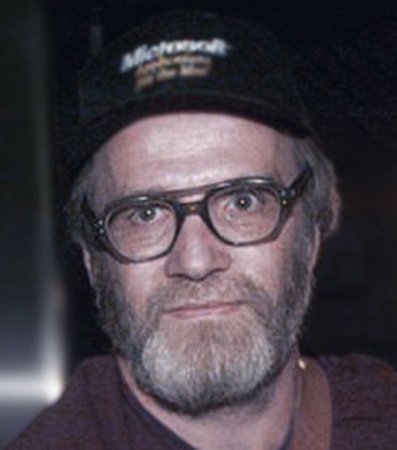
Ray Gricar (Bellafonte Police Department)

When Robert Mix, the incumbent district attorney, chose not to seek reelection in 1985, Ray Gricar ran for the open position and won. He subsequently won reelection in 1989, 1993, 1997, and 2001. During his tenure, Gricar lobbied to have the position of district attorney be full-time, succeeding in 1996.

In 1995, the district attorney’s office received allegations of child sexual abuse against assistant Penn State football coach Jerry Sandusky. Gricar declined to prosecute, and Sandusky continued his abuse for another dozen years.

Ray Gricar Vanishes

On April 15, 2005, Gricar was returning from a trip. He phoned his girlfriend, Patty Fornicola, at 11:30 a.m. to tell her he was driving through an area northeast of Centre Hall, a small community about ten miles east of State College. He never made it home. Fornicola reported him missing that evening.

The following day, authorities found Gricar’s red Mini Cooper parked at Street of Shops, an antique mall in Lewisburg, Pennsylvania, more than 50 miles away from State College by the shortest route. Inside, they found Gricar’s county-issued cellphone but not his laptop, car keys, or wallet. There was no sign of foul play, and a check of Gricar’s bank and phone records revealed no clues to where he might have gone. Relatives noted that the location of the car, near a bridge over the Susquehanna River, bore some similarities to how Ray’s older brother, Roy, left his car when he died by suicide in 1996.

Ray Gricar shown with the Red Mini Cooper found at the Street of Shops antique mall (Bellefonte Police/Centre Daily Times/AP)

More than two months later, on July 30, fishermen found Gricar’s county-issued laptop underneath the bridge linking Lewisburg and Milton, Pennsylvania. The computer’s hard drive was missing. Over the next few days, divers searched the river in vain for the missing disk. Two months later, someone did come across a hard drive on the riverbank about 100 yards from where the laptop was found. The disk had suffered considerable damage, and neither the FBI nor data recovery firm Kroll Ontrack could extract any meaningful information.

Gricar's adopted daughter, Lara (pennlive.com/Patriot-News)
Gricar’s adopted daughter, Lara (pennlive.com/Patriot-News)

In June 2011, Gricar’s daughter, Lara, petitioned Centre County to declare him legally dead. Judge David E. Grine declared him dead on July 25, 2011. Coincidentally, Grine was the district attorney who initially hired Gricar after his move to State College.

What Happened to Ray Gricar?

There are three primary theories of what happened to Ray Gricar. The first, and the one police feel is most likely, is that he died by suicide like his older brother had five years earlier. Some similarities between the two cases lend support to this theory. Gricar’s family, however, does not believe he killed himself. He had no history of depression or suicidal thoughts, and he was said to be looking forward to his retirement when his term as district attorney expired.

Gricar's girlfriend, Patty Fornicola, described him as a caring and giving person (Nabil K. Mark/Centre Daily Times/AP)
Gricar’s girlfriend, Patty Fornicola, described him as a caring and giving person (Nabil K. Mark/Centre Daily Times/AP)

Foul play is also a possibility. During his time as district attorney, Gricar was involved with police in breaking up a heroin ring. Police investigated the persons involved in the ring for any possible connection to Gricar’s disappearance but found none. There were also hints—but no evidence—that his refusal to prosecute Jerry Sandusky might be behind his disappearance.

A third theory is that Gricar engineered his disappearance to start a new life elsewhere. There were several reported Gricar sightings in the area, although none could be confirmed as genuine. The day after Judge Grine declared Gricar legally dead, police in Utah arrested a “John Doe” who bore more than a passing resemblance to Gricar. Fingerprints proved the “John Doe” was not the missing attorney.

Epilogue

There have been no verifiable sightings of Ray Gricar in almost twenty years. If he is still alive, he would be 79 years old.

You can read more about the Ray Gricar case in The Disappearance of Ray Gricar by Pete Dove.

Don’t Miss Out! Subscribe to the Newsletter

Subscribe to True Crime in the News, a monthly email newsletter examining recent news stories that will interest any true crime fan. The newsletter also summarizes the previous month’s blog posts. You won’t want to miss this. Join the newsletter mailing list today.
Tylenol Murders: Strange and Horrific Case Never Solved

We tend to take the safety of our food and medicines for granted. However, in 1982, investigators traced a series of deaths in the Chicago area to adulterated Tylenol capsules. Someone had tampered with bottles of Extra-Strength Tylenol, replacing the contents with potassium cyanide, a deadly poison. The case was never solved.

The Tylenol Deaths

On September 28, 1982, 12-year-old Mary Kellerman’s parents rushed her to a hospital when she became ill after taking a capsule of Extra-Strength Tylenol. Mary died the next day, September 29. Also, on September 29, six other people consumed capsules containing cyanide instead of acetaminophen, Tylenol’s active ingredient. All six ultimately died from ingesting the tainted product.

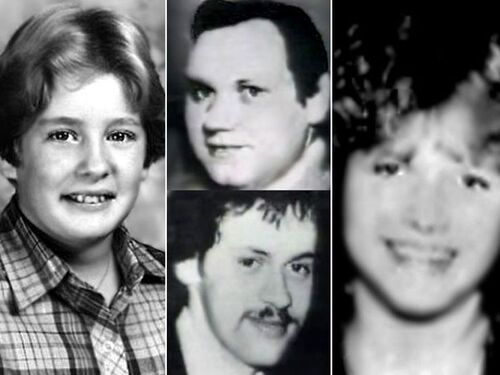
The first four victims of the Tylenol murders: Mary Kellerman, Adam Janus, Stanley Janus, and Theresa Janus (Criminal Minds Wiki)

Postal worker Adam Janus, 27, failed to wake up from a nap after taking Tylenol for a sore throat. He was transported to an emergency room, where he later died. His younger brother, Stanley Janus, 25, and Stanley’s wife, Theresa, 20, returned to Adam’s house after visiting him in the hospital. Both took capsules from the Tylenol bottle sitting on a counter. Stanley died later that same day. Theresa went into a coma and died on October 1.

Tylenol murder victims Rary Reiner, Mary McFarland, and Paula Prince (Criminal Minds Wiki)
Tylenol murder victims Mary Reiner, Mary McFarland, and Paula Prince (Criminal Minds Wiki)

Other known victims were Mary Reiner, Mary McFarland, and United Airlines flight attendant Paula Prince.

Discovering the Tylenol Connection

The first person to connect Tylenol to the suspicious deaths was Arlington Heights village nurse Helen Jensen. Tasked with investigating the Janus’ deaths, she visited the Janus home. Inside, she found an Extra-Strength Tylenol bottle with six missing capsules. The receipt for the bottle showed Janus had purchased it at an Arlington Heights Jewel-Osco. Jensen gave the bottle to investigator Nick Pishos, telling him she suspected it was related to the three Janus’ deaths.

Former Arlington Heights village nurse Helen Jensen in 2022 (Suburb Talk)

Pishos then sniffed the bottle and immediately noticed the scent of almonds, an odor indicative of cyanide. Chemical tests determined that four of the 44 capsules left in the bottle contained about three times the fatal dose of potassium cyanide.

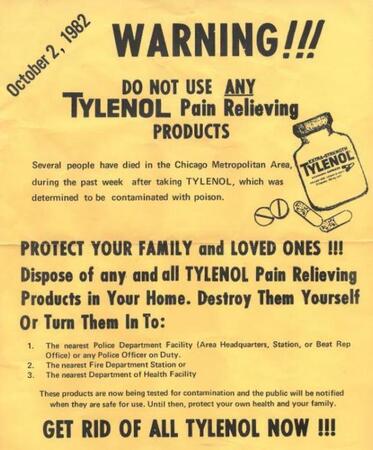
Paramedics had inventoried the Kellerman bottle, and investigators observed that it and the Janus bottle came from the same lot number, MC2880. Johnson & Johnson, Tylenol’s manufacturer, issued a recall for that lot number. The company expanded the recall when the investigation determined that bottles from other lot numbers contained contaminated capsules. The recall eventually applied to all Tylenol products.

Investigating the Tylenol Murders

Investigators discovered that the contaminated capsules came from two manufacturing plants, one in Texas and another in Pennsylvania. Consequently, police theorized that the tampering had occurred at the stores. They reasoned that the perpetrator had removed Tylenol bottles from store shelves. Then, he (or she) put potassium cyanide in some capsules before putting the bottles back on the shelf. Besides the five poisoned bottles that caused the known deaths, police found a few other bottles in the Chicagoland area.

Poster advising households to destroy all Tylenol products (CBS News)

The investigation found the tampered pills were sold or on the shelves at a variety of stores in the Chicago area: Jewel Foods locations in Arlington Heights and Elk Grove Village; an Osco Drug store in Schaumburg; a Walgreens and a Dominick’s, both in Chicago; and a Frank’s Finer Foods in Winfield.

Linda Morgan, the wife of Judge Lewis V. Morgan, bought a contaminated bottle but did not use it because it had an odd smell.

Tylenol Murder Suspects

Early in the investigation, police discovered an extortion attempt related to the poisonings.  New York City resident James William Lewis sent a letter to Johnson & Johnson demanding $1 million to stop the murders. Lewis admitted writing the letter and evidenced a great interest in cyanide poisoning but denied responsibility for the murders. He was convicted of extortion and sentenced to ten years in prison.

Tylenol murder suspect James William Lewis (Criminal Minds Wiki)

Records released in 2009 indicated that Department of Justice officials considered Lewis the poisoner. However, they did not have sufficient evidence to charge him. Tests performed in 2010 revealed that DNA from Lewis and his wife did not match any DNA recovered from the tainted bottles. Lewis died on July 9, 2023, at age 76.

Roger Arnold was another suspect. Arnold exhibited erratic behavior after his marriage broke up and talked about killing people with a white powder. He also owned a copy of The Poor Man’s James Bond, which includes instructions for making cyanide. Police detained him several times but never charged him. He died in 2008.

In May 2011, the FBI requested DNA samples from Ted Kaczynski, the “Unabomber.” The first four Unabomber attacks occurred in the Chicago area, and Kaczynski’s parents owned a home in a Chicago suburb. Nothing came from these tests.

Epilogue

Despite an intensive investigation by Chicago Police, the Illinois State Police, and the FBI, no one was ever charged with the seven Tylenol murders.

Numerous copycat crimes and hoaxes followed in the years after the 1982 Chicago poisonings. Perhaps the most notorious of these occurred in Seattle. Stella Nickell staged a product tampering with Excedrin capsules to poison her husband, Bruce. Unfortunately, her scheme also killed 40-year-old bank manager Susan Snow. Nickell now resides at Federal Correctional Institution Hazelton in West Virginia. At age 81, she is unlikely to see her March 7, 2043, release date.

The Chicago Tylenol poisonings resulted in significant changes to the way over-the-counter drugs are packaged and sold.

You can read more about the Tylenol murders in The Tylenol Murders: An Over The Counter American Crisis by Nicholas Mennuti and Chai Hecht and in TYMURS: The 1982 Tylenol Murders by Scott Bartz.

Don’t Miss Out! Subscribe to the Newsletter

Subscribe to True Crime in the News, a monthly email newsletter examining recent news stories that will interest any true crime fan. The newsletter also summarizes the previous month’s blog posts. You won’t want to miss this. Join the newsletter mailing list today.

Villisca Axe Murders: An Astonishing Old Murder Case

Some crimes fascinate us because of their gruesome details. Others pique our interest when they go unsolved, eternal mysteries that are fodder for endless speculation. This case I present in this week’s blog post has both elements. The Villisca axe murders left eight people—six of them children—dead in their beds. And it has gone unsolved for 112 years.

The Villisca Axe Murders Discovered

The little town of Villisca, Iowa, is in the southwestern part of the state, about ten miles from the border with Missouri. The population in 1912 was around 2,000 people, so most residents knew each other at least slightly.

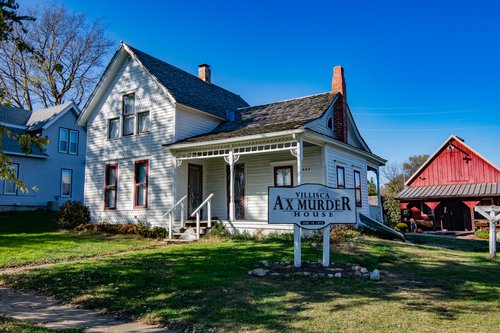
The Moore house in Villisca, Iowa, scene of the 1912 Villisca axe murders (Jason McLaren)
The Moore house in Villisca, Iowa, scene of the 1912 Villisca axe murders, photographed in 2016 (Jason McLaren)

On the morning of June 10, 1912, the Josiah Moore house on Second Street was strangely quiet. At 7:00 a.m., a neighbor, Mary Peckham, became concerned when no one came outside to perform the morning chores. She knocked on the Moore’s door and, receiving no answer, tried the doorknob but found it locked. After letting the Moore’s chickens out, Peckham called Ross Moore, Josiah’s brother. Ross also failed to get a response to his knocks and shouts, so he used his copy of the key to gain entry.

Inside the house, Ross discovered the bodies of Ina and Lena Stillinger, two friends of the Moores’ daughter who were overnight guests. Bolting back out of the house, he told Peckham to call Villisca’s peace officer, Henry “Hank” Horton.

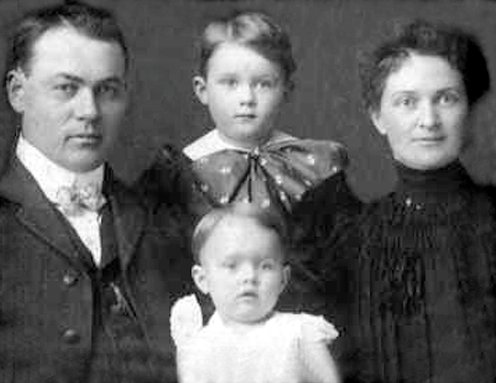
Villisca axe murder victims Josiah and Sarah Moore, with their two oldest children, Herman and Katherine, ca. 1905.
Villisca axe murder victims Josiah and Sarah Moore, with their two oldest children, Herman and Mary Katherine, ca. 1905.

Horton’s search of the house revealed that all six members of the Moore household, as well as the two Stillinger sisters, were dead. Every one of them had been clubbed to death by an axe. The killer used the axe blade on Josiah’s wife, Sarah, but used the blunt end on the rest of the victims. Horton found the murder weapon, an axe that belonged to Josiah, in the guest room, along with the bodies of Ina and Lena Stillinger.

Reconstructing the Villisca Axe Murders

Authorities made a concerted effort to determine how the crime unfolded. The killer–or killers—may have waited in the attic before striking. Josiah Moore had been killed first. The ceiling above his body had a gouge mark from when the murderer raised the axe. Sarah Moore died next. Then, the killer dispatched the Moores’ four children, Herman, Mary Katherine, Arthur, and Paul, before returning to the master bedroom. There, he rained more blows on the adult Moores. Next, he entered the guest bedroom, where he bludgeoned the Stillinger sisters to death.

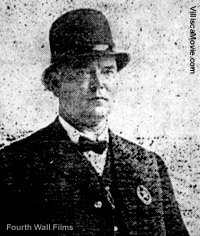
Villisca peace officer Henry "Hank" Horton
Villisca peace officer Henry “Hank” Horton

Investigators believed that Lena Stillinger may have awakened before she was killed. Her body was lying crosswise on the bed, and she had a defensive wound on her arm. The other seven victims appeared to have been asleep when the blows fell.

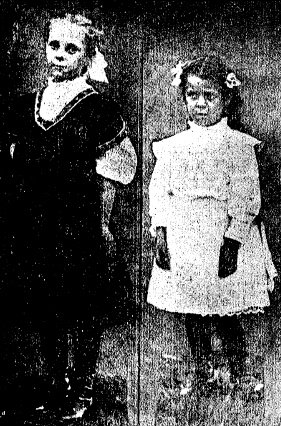
Sisters Ina (L) and Lena (R) Stillinger were also Villisca axe murder victims
Sisters Ina (L) and Lena (R) Stillinger were also Villisca axe murder victims.

Unfortunately, crime investigation techniques were not as sophisticated in 1912 as today. Numerous townspeople tramped through the house and handled the axe presumed to be the murder weapon. Any forensic evidence was trampled underfoot.

Villisca Axe Murder Suspects

Authorities investigated several suspects, but none of them was convicted of the murders.

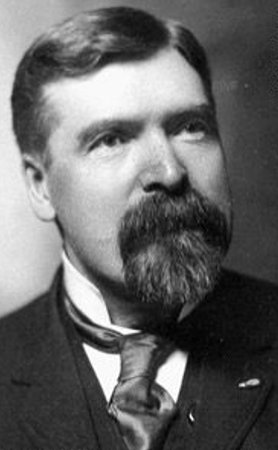
One prominent suspect was Frank F. Jones, who lived in Villisca and was a state senator. Josiah Moore had worked for Jones’ farm implement company for several years before leaving to open his own hardware store. Moore supposedly took business away from Jones, including a lucrative John Deere dealership. Burns Detective Agency operative James Wilkerson was sure Jones committed the murders, or at least had hired the killer. However, Jones had an ironclad alibi, and investigators dismissed him as a suspect.

Villisca axe murder suspect Frank F. Jones

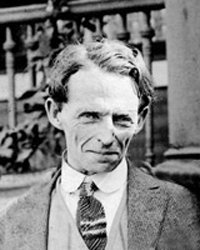
Another possible suspect was the Reverend George Kelly, an English-born traveling Presbyterian minister. Townspeople described Kelly as “peculiar,” and he had been accused of peeping and asking young women to pose nude for him. He was in town on the night of the murders and evidenced a fascination with them.

Villisca aze murder suspect Rev. Lyn George Jacklin Kelly
Suspect Rev. Lyn George Jacklin Kelly

Five years later, in 1917, police arrested Kelly for the Villisca axe murders. He confessed after a lengthy—and likely none-too-gentle— interrogation, but he later recanted. Tried twice; the first trial ended in a hung jury, and the second in an acquittal.

Other suspects included Andrew Sawyer, a transient; William Mansfield, an ex-convict, and Wilkerson’s choice as the “hired killer;” Henry Lee Moore (unrelated), who murdered his mother and grandmother a few months after the Villisca murders; and Paul Mueller, a suspected serial killer who rode the railroads from crime to crime.

Epilogue

Despite several promising suspects, authorities could not convict any of them of the crimes. The murders remain unsolved well over a century after they occurred.

You can read more about the Villisca Axe Murders in The Villisca Axe Murders: A House of Horror by Dominque Bridges. Other books include Edgar Epperyly’s Fiend Incarnate and Villisca by Roy Marshall.

Don’t Miss Out! Subscribe to the Newsletter

Subscribe to True Crime in the News, a monthly email newsletter examining recent news stories that will interest any true crime fan. The newsletter also summarizes the previous month’s blog posts. You won’t want to miss this. Join the newsletter mailing list today.
World’s Fair Time Bomb is Daring and Disastrous

World’s Fairs are a way for countries to thump their chests and show the best of their nations and cultures. The 1939-40 World’s Fair in New York City highlighting “The World of Tomorrow” was no exception. But a bomb explosion in 1940 dampened the fun.

The 1939 World’s Fair

The spring of 1939 was full of ominous signs. Germany had annexed Austria a year earlier, and in October, the Nazi regime had taken over the Sudetenland region of Czechoslovakia. On March 16. 1939, Adolf Hitler proclaimed the Protectorate of Bohemia and Moravia, extinguishing the independence of what had been left of Czechoslovakia.

Poster for the 1939-1940 New York World's Fair (Joseph Binder)
Poster for the 1939-1940 New York World’s Fair (Joseph Binder)

Nevertheless, a World’s Fair opened on April 30, 1939, with the slogan, “Dawn of a New Day.” It was the first fair to focus on the future, not a mystical, unknowable future, but one based on the extension of new but current technologies. For instance, television debuted at the fair’s RCA Pavilion. NBC broadcast President Franklin D. Roosevelt’s speech and part of the opening ceremonies (in black and white) to the approximately 1,000 television sets scattered throughout New York City.

Other fair exhibits included “Elektro the Moto-Man,” a seven-foot-tall robot (Westinghouse), a time capsule to be opened in 6939, nylon, the View-Master, and General Motors’ vision for a car-based futuristic city.

Five months after the fair opened and after it closed for the 1939 season, Germany invaded Poland, launching World War II. The fair continued, though, reopening for its second season in April 1940. While America was not yet at war, much of Europe was under the Nazi heel.

A Bomb at the World’s Fair

It was July 4, 1940, American Independence Day. At the British Pavilion, a caller told the telephone switchboard operator that a bomb had been planted in the building and she should “get out.”

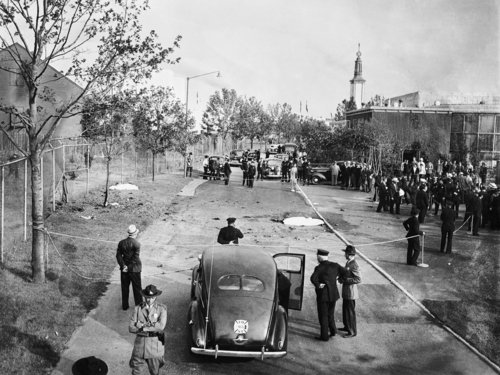
Meanwhile, an electrician discovered a small canvas satchel in a ventilation room on an upper level of the pavilion. (It’s unclear whether the discovery came independently or as a result of the phone call). Patrol officers gingerly took the satchel to an open area behind the Polish Pavilion and waited for bomb squad detectives.

A view of the British Pavilion at the World's Fair after the bomb was discovered (AP)
A view of the British Pavilion at the World’s Fair after the bomb was discovered (AP)

Detective Joseph Lynch was a college graduate who had trained as a pharmacist. The Great Depression squashed his plans to open his own drugstore, so he chose the stability of joining the police department instead. His education and intelligence allowed him to move quickly to the elite Bomb and Forgery Squad.

On this July 4, Lynch was on call but enjoying the holiday at home when he received a call about the suspicious package at the World’s Fair. He borrowed his sister’s car and drove to the Greenpoint section of Brooklyn to pick up his partner, Ferdinand “Freddy” Socha. Socha, also college-educated, was off duty but agreed to accompany his partner to the fair in Flushing Meadow Park.

The World’s Fair Bomb Kills the Two Detectives

At that time, Bomb Squad detectives had virtually no protective gear or safety equipment. Instead, they relied on experience, simple tools, and guts.

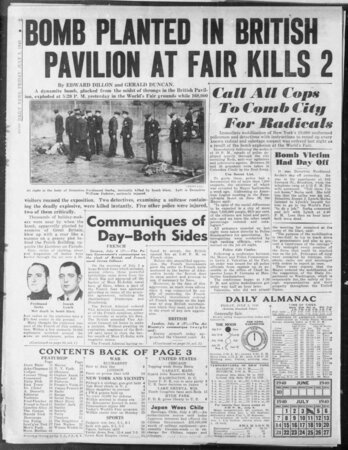
The New York Daily News featured the bombing in its July 5 edition (Daily News)
The New York Daily News featured the bombing in its July 5 edition (New York Daily News)

When Lynch and Socha arrived, they heard an audible ticking coming from the satchel. Socha bent down and used a pocket knife to cut a small hole in the case. Lynch peered through the hole and saw sticks of dynamite. “It’s the business,” he said to his partner.

Bomb Squad detectives Joseph Lynch (L) and Ferdinand Socha (R) were killed in the World's Fair bomb exploded (New York Post)
Bomb Squad detectives Joseph Lynch (L) and Ferdinand Socha (R) were killed in the World’s Fair bomb exploded (New York Post)

Seconds later, the package exploded, killing Lynch and Socha instantly. Patrolman Emil Vyskocil, who had been moving bystanders away, suffered severe shrapnel injuries to his back and legs. Detectives William Federer, Martin Schuchman, and Joseph Gallagher were also injured in the blast.

The New York City Police Department assigned 1,500 detectives to the case. They interviewed more than a hundred individuals, including members of fascist and pro-Nazi groups. They also interviewed workers at the British Pavilion on the theory that the bombing was an inside job. New York Mayor Fiorello LaGuardia offered a $25,000 reward (almost $561,000 in 2024) for information leading to the arrest and conviction of the bombers. The police union added $1,000.

Despite these measures, police never identified the bomber or his motives.

Epilogue

The murders of Joseph Lynch and Ferdinand Socha led to almost immediate improvements in safety equipment and protocols for Bomb Squad detectives. One of these was the LaGuardia-Pyke bomb truck, which, with modifications, is still in use today.

The LaGuardia-Pyke bomb truck (NYPD)

One theory of the bombing is that William Stephenson engineered the blast to push America into joining Britain in the war against Germany. Stephenson, Britain’s master spy and later the model for Ian Fleming’s James Bond, was then working in Manhattan. However, no proof of the Stephenson connection has emerged.

The 1940 World’s Fair bombing remains unsolved today.

You can read more about the 1939 World’s Fair in James Mauro’s Twilight at the World of Tomorrow: Genius, Madness, Murder, and the 1939 World’s Fair on the Brink of War.

Don’t Miss Out! Subscribe to the Newsletter

Subscribe to True Crime in the News, a monthly email newsletter that looks at recent news stories that will interest any true crime fan. There is also a summary of the previous month’s blog posts. You won’t want to miss this. Join the newsletter mailing list today.