
Some crimes fascinate us because of their gruesome details. Others pique our interest when they go unsolved, eternal mysteries that are fodder for endless speculation. This case I present in this week’s blog post has both elements. The Villisca axe murders left eight people—six of them children—dead in their beds. And it has gone unsolved for 112 years.
The Villisca Axe Murders Discovered
The little town of Villisca, Iowa, is in the southwestern part of the state, about ten miles from the border with Missouri. The population in 1912 was around 2,000 people, so most residents knew each other at least slightly.
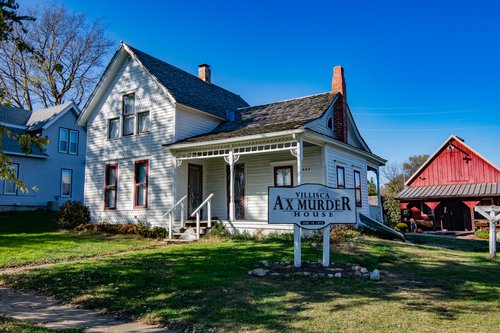
On the morning of June 10, 1912, the Josiah Moore house on Second Street was strangely quiet. At 7:00 a.m., a neighbor, Mary Peckham, became concerned when no one came outside to perform the morning chores. She knocked on the Moore’s door and, receiving no answer, tried the doorknob but found it locked. After letting the Moore’s chickens out, Peckham called Ross Moore, Josiah’s brother. Ross also failed to get a response to his knocks and shouts, so he used his copy of the key to gain entry.
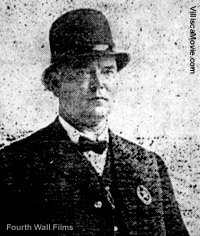
Inside the house, Ross discovered the bodies of Ina and Lena Stillinger, two friends of the Moores’ daughter who were overnight guests. Bolting back out of the house, he told Peckham to call Villisca’s peace officer, Henry “Hank” Horton.

Horton’s search of the house revealed that all six members of the Moore household, as well as the two Stillinger sisters, were dead. Every one of them had been clubbed to death by an axe. The killer used the axe blade on Josiah’s wife, Sarah, but used the blunt end on the rest of the victims. Horton found the murder weapon, an axe that belonged to Josiah, in the guest room, along with the bodies of Ina and Lena Stillinger.
Reconstructing the Villisca Axe Murders
Authorities made a concerted effort to determine how the crime unfolded. The killer–or killers—may have waited in the attic before striking. Josiah Moore had been killed first. The ceiling above his body had a gouge mark from when the murderer raised the axe. Sarah Moore died next. Then, the killer dispatched the Moores’ four children, Herman, Mary Katherine, Arthur, and Paul, before returning to the master bedroom. There, he rained more blows on the adult Moores. Next, he entered the guest bedroom, where he bludgeoned the Stillinger sisters to death.
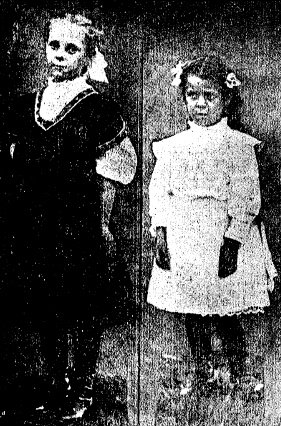
Investigators believed that Lena Stillinger may have awakened before she was killed. Her body was lying crosswise on the bed, and she had a defensive wound on her arm. The other seven victims appeared to have been asleep when the blows fell.
Unfortunately, crime investigation techniques were not as sophisticated in 1912 as today. Numerous townspeople tramped through the house and handled the axe presumed to be the murder weapon. Any forensic evidence was trampled underfoot.
Villisca Axe Murder Suspects
Authorities investigated several suspects, but none of them was convicted of the murders.
One prominent suspect was Frank F. Jones, who lived in Villisca and was a state senator. Josiah Moore had worked for Jones’ farm implement company for several years before leaving to open his own hardware store. Moore supposedly took business away from Jones, including a lucrative John Deere dealership. Burns Detective Agency operative James Wilkerson was sure Jones committed the murders, or at least had hired the killer. However, Jones had an ironclad alibi, and investigators dismissed him as a suspect.
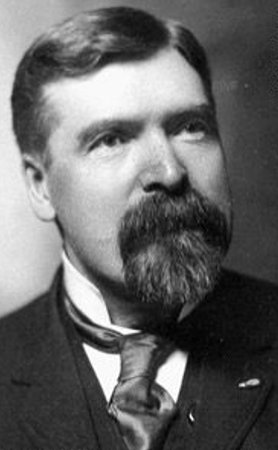
Another possible suspect was the Reverend George Kelly, an English-born traveling Presbyterian minister. Townspeople described Kelly as “peculiar,” and he had been accused of peeping and asking young women to pose nude for him. He was in town on the night of the murders and evidenced a fascination with them.

Five years later, in 1917, police arrested Kelly for the Villisca axe murders. He confessed after a lengthy—and likely none-too-gentle— interrogation, but he later recanted. Tried twice; the first trial ended in a hung jury, and the second in an acquittal.
Other suspects included Andrew Sawyer, a transient; William Mansfield, an ex-convict, and Wilkerson’s choice as the “hired killer;” Henry Lee Moore (unrelated), who murdered his mother and grandmother a few months after the Villisca murders; and Paul Mueller, a suspected serial killer who rode the railroads from crime to crime.
Epilogue
Despite several promising suspects, authorities could not convict any of them of the crimes. The murders remain unsolved well over a century after they occurred.
You can read more about the Villisca Axe Murders in The Villisca Axe Murders: A House of Horror by Dominque Bridges. Other books include Edgar Epperyly’s Fiend Incarnate and Villisca by Roy Marshall.
Don’t Miss Out! Subscribe to the Newsletter
Subscribe to True Crime in the News, a monthly email newsletter examining recent news stories that will interest any true crime fan. The newsletter also summarizes the previous month’s blog posts. You won’t want to miss this. Join the newsletter mailing list today.