Jackson and Freeman: Murder of a Boy and Girl

When adults run into difficult or illicit situations, children are often collateral damage. Such was the case with Gertrude Jackson and Jeannace Freeman. In Oregon in 1961, the pair conspired to kill Jackson’s two children, Martha and Larry. Jackson and Freeman became the central focus of one of Oregon’s most shocking and controversial murder cases.

Gertrude Jackson and Jeannace Freeman

Gertrude Mae Jackson, who also styled herself as Gertrude May Nuñez Jackson, was a 33-year-old mother of two young children who worked as a shirt presser at a Eugene, Oregon, laundry. She was a petite woman who preferred dresses to trousers. Jackson’s life took a tragic turn when she hired a teenage babysitter who would become both her romantic partner and co-defendant in an unthinkable crime.

Jeannace June Freeman was just 19 years old when Jackson hired her as a babysitter for Jackson’s two children, six-year-old Larry and four-year-old Martha. Freeman, who would later be characterized as having a masculine appearance and demeanor, developed a relationship with Jackson that extended beyond that of employer and employee.

Gertrude Mae Jackson, mother of the slain children (Darrel Church/The Bend Bulletin)

The Murder of the Jackson Children

On May 12, 1961, the bodies of Larry and Martha Jackson were discovered in the Crooked River Ravine at Ogden State Park. Investigators described their injuries as exceptionally brutal. The discovery of their bodies in this remote location launched an immediate investigation. It soon led authorities to an unlikely pair of suspects.

The Crooked River High Bridge spans the Crooked River near where Jackson and Freeman dumped Martha and Larry Jackson. The nearby Rex T. Barber Veterans Memorial Bridge replaced it for automobile traffic in 2000.  (flicker.com)
The Crooked River High Bridge spans the Crooked River near where Jackson and Freeman dumped Martha and Larry Jackson. The nearby Rex T. Barber Veterans Memorial Bridge replaced it for automobile traffic in 2000. (flicker.com)

Within days of the discovery, authorities arrested both Jackson and Freeman in California and charged them with first-degree murder. The case quickly became a sensation because of the heinous nature of the crime and the unusual circumstances surrounding the killers. The relationship between Jackson and Freeman, along with the motive for the crime, shocked the conservative Oregon community of the early 1960s.

Gertrude Jackson Confesses

The investigation revealed a disturbing narrative. According to the evidence presented at trial, Jackson and Freeman had developed a romantic relationship. They believed that Jackson’s children hindered that relationship. This perceived interference allegedly led to the decision to eliminate what they saw as obstacles to their romance.

Jeannace June Freeman (The Oregonian)

Gertrude Jackson’s response to the investigation proved crucial to the development of the case. She confessed almost immediately after her arrest. However, in her confession, she blamed the entire incident on Freeman. According to her story, Freeman beat young Larry to death in a fit of rage. Jackson, who claimed to be under Freeman’s control, killed Martha, who she said was still alive when she and Freeman tossed her into the ravine.

Jackson and Freeman Convicted

Gertrude Jackson was convicted of second-degree murder in September 1961 and sentenced to life in prison. Jeannace Freeman, although the younger of the two women, was convicted of first-degree murder the same month and sentenced to death. She was the first woman to receive the death penalty in Oregon.

This disparity between the two sentences raised questions about the fairness of the proceedings and the factors that influenced the court’s decisions. Legal observers felt that Freeman’s masculine appearance and demeanor, combined with prejudice against homosexuality, had influenced the severity of her sentence. The Jackson-Freeman case occurred during an era when homosexuality was not only socially stigmatized but also a criminal offense in most jurisdictions. In this context, the relationship between Jackson and Freeman became as much a subject of public fascination and revulsion as the crime itself. Media coverage of the case reflected the prejudices of the time. The press portrayed Freeman’s “masculinity and lesbianism” as evidence of her greater culpability in the murders.

Epilogue

Jeannace Freeman’s appeals of her death sentence failed, but she never faced the gas chamber. After Oregon voters abolished capital punishment in 1964, Governor Mark Hatfield commuted her sentence to life in prison. She was paroled in 1985 after serving 25 years and changed her name to Wilma Lin Rhule. However, she found herself incarcerated again after a conviction for coercion and unlawful use of a dangerous weapon. She died in prison of cancer and emphysema on December 19, 2003, at age 62.

Surprisingly, Gertrude Jackson was paroled in 1968 after serving only seven years of her life sentence. Her life after prison is unknown.

Don’t Miss Out! Subscribe to the Newsletter

Subscribe to True Crime in the News, a monthly email newsletter that examines recent news stories of interest to true crime enthusiasts. The newsletter also summarizes the previous month’s blog posts. You won’t want to miss this. Join the newsletter mailing list today.
Robert Cook: Old Family Murder is Astonishing and Horrific

This week, I present an old case from Canada. In the summer of 1959, seven members of the Cook family were murdered in their home. The man eventually convicted of the crime and executed for it was the oldest son, Robert Cook. Although it would appear to be “case closed,” questions remain today.

The Cook Family is Murdered

On June 28, 1959, the small prairie town of Stettler, Alberta, was rocked by the discovery of a crime so horrific it would leave an enduring scar on the province’s history. The entire Cook family—father Raymond, stepmother Daisy, and five children aged three to nine—was found murdered and hidden in a grease pit beneath their garage. The adults had been shot, while the children had been bludgeoned. All had been killed while in their nightclothes, suggesting they were attacked as they slept.

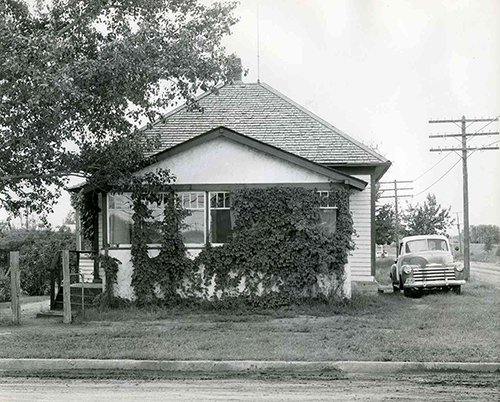
The Cook family home in Stettler, Alberta, Canada (Legal Archives Society of Alberta)

This brutal massacre stunned not only Stettler but the entire nation. The only suspect was 21-year-old Robert Raymond Cook, the eldest son of Raymond and his first wife, who had died a decade earlier. What followed was one of the most infamous and debated criminal cases in Canadian history. Troubling evidence, a dramatic escape, and a controversial execution marked the case.

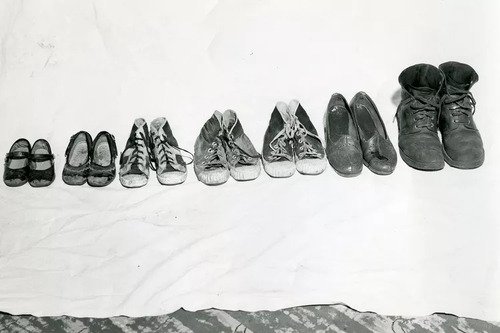
Shoes belonging to murder victims (Legal Archives Society of Alberta)

Robert Cook Had a Troubled Past

Robert Cook was no stranger to the justice system. Born in 1937, he began his criminal behavior at the age of ten and was in and out of institutions throughout his youth. Following his early release from jail in 1959, he returned to Stettler, supposedly to reconnect with his family. But his criminal tendencies quickly resurfaced.

In late June, he was arrested in Edmonton after attempting to trade the family station wagon using his father’s identification. Investigators found various family documents, children’s clothing, and household items in the vehicle. When questioned, Robert gave shifting explanations about his parents’ whereabouts, arousing further suspicion.

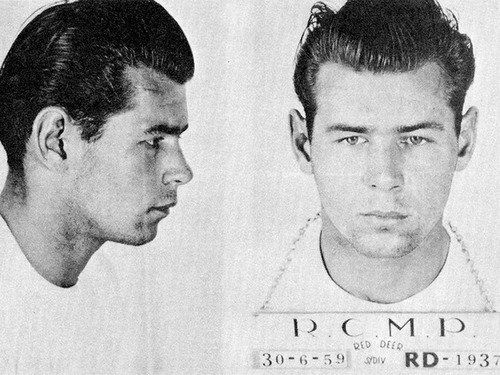
Robert Cook at the time of his arrest (Royal Canadian Mounted Police)

Concerned by his vague answers, police visited the Cook residence in Stettler. There, they found bloodstains and signs of violence. After a further search, officers made the grim discovery: the bodies of all seven family members stacked beneath the garage.

Robert Cook is Arrested, Escapes, and Captured Again

Robert Cook was immediately taken into custody. Though he was accused of killing all seven family members, the Crown chose to prosecute him only for the murder of his father, which was most likely a decision to streamline the legal process. Before trial proceedings could begin, Robert was sent to the Ponoka Mental Hospital for psychiatric assessment. However, he escaped the facility within days of his arrival on July 11, 1959.

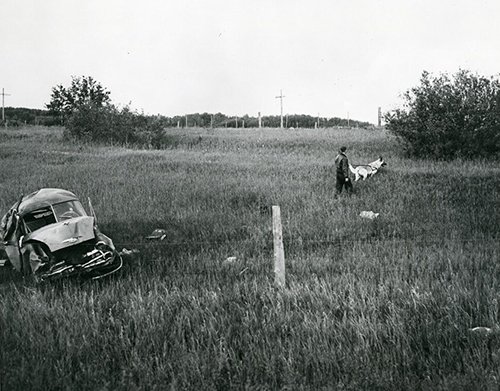
An RCMP officer uses a dog to search for Robert Cook after he escaped from Ponoka Mental Hospital (Legal Archives Society of Alberta)

His escape sparked one of the largest manhunts in Alberta’s history. Police, military personnel, and even civilian volunteers scoured the countryside for weeks. The fugitive was finally located hiding in a pigsty near Bashaw, Alberta, about 60 kilometers from Stettler. He was arrested without incident and returned to custody, this time under far stricter conditions.

Robert Cook on Trial—Twice

Robert’s first trial was held in Red Deer in December 1959. The prosecution’s case rested heavily on circumstantial evidence: his inconsistent stories, his use of his father’s identity, and the suspicious items found in his car. There were no fingerprints, eyewitnesses, or direct forensic links placing him at the scene during the time of the murders. Nevertheless, the jury found him guilty. However, he won a retrial on appeal.

A second trial in 1960, this time in Edmonton, reached the same conclusion. The defense attempted to raise doubts about the timeline and the lack of physical evidence, but the verdict stood. Appeals to higher courts, including the Supreme Court of Canada, were all denied. In November 1960, Robert Raymond Cook was hanged at Fort Saskatchewan Provincial Gaol, the last person to be executed in Alberta.

Lingering Doubts About Robert Cook’s Guilt

To this day, Robert’s guilt remains a subject of debate. Supporters of the conviction argue that his behavior and possession of family belongings indicated involvement. Yet others have long contended that the case was built on inference rather than proof. The absence of a murder weapon, fingerprints, or a confession left room for doubt.

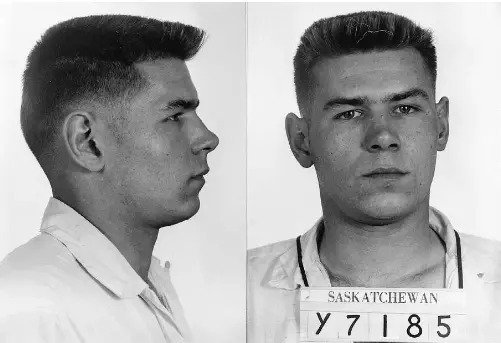
Robert Raymond Cook mugshot

Robert himself steadfastly maintained his innocence until the end. In a poem written while on death row, he lamented what he saw as a miscarriage of justice:

“I sit here in my death cell, I know not why,
For the evidence proved me innocent, and that is no lie…”

Questions have also been raised about his mental state. A documented prison assault the year before the murders may have caused head trauma, possibly affecting his cognition. However, at the time, such factors were poorly understood and rarely taken into account in criminal proceedings.

The Legacy of Robert Cook

The Cook family murders are among the most harrowing crimes in Canadian history. The sheer brutality of the killings, coupled with the unanswered questions surrounding the case, has kept the story alive in Alberta’s collective memory. Plays, books, and documentaries have revisited the events, often focusing on the lingering uncertainties surrounding Robert Cook’s guilt.

The case also marked a turning point in Canada’s evolving views on capital punishment. In 1976, just sixteen years after Cook’s execution, the federal government abolished the death penalty for civilian crimes. While the Cook case was not the only reason, it undoubtedly contributed to public and political unease about the possibility of executing the wrong person.

Epilogue

The Cook family murders remain a haunting reminder of the complexities of justice. Although the courts rendered their verdict and the sentence was carried out, many Canadians, both then and now, have questioned whether justice was truly served. The enormity of the crime, the uncertainty of the evidence, and the finality of the punishment converge in a story that continues to provoke reflection more than six decades later.

Don’t Miss Out! Subscribe to the Newsletter

Subscribe to True Crime in the News, a monthly email newsletter that examines recent news stories of interest to true crime enthusiasts. The newsletter also summarizes the previous month’s blog posts. You won’t want to miss this. Join the newsletter mailing list today.
Susan Smith: Sensational Murder of Boy and Baby

A parent who murders their own child is a special kind of pariah in society. It is a crime most people find unthinkable. But anyone old enough in 1994 to be aware of current events will likely remember just such a crime. That was the case of Susan Smith, a mother who drowned her two young sons in a South Carolina Lake.

Susan Smith

Susan Smith’s childhood was far from ideal. Born Susan Leigh Vaughn, her father died by suicide when she was only six years old. Her stepfather, Beverly C. Russell, Jr., molested her as a teenager, and the two continued to have sexual relations until six months before she murdered her two boys. (Russell later became prominent in the South Carolina Republican Party and, ironically, the Christian Coalition.) Susan herself attempted suicide at age 13 and again after high school when the married man with whom she was having a relationship broke off their affair.

Susan Smith's booking photo (Brooks Kraft/Sygma via Getty Images)
Susan Smith’s booking photo (Brooks Kraft/Sygma via Getty Images)

In 1991, she married David Smith. The couple had two sons, Michael Daniel, born in 1991, and Alexander Tyler, born in 1993.

Susan Smith Reports a Crime

On October 25, 1994, Smith called the police to report that a Black man had carjacked her, taking her 1990 Mazda Protégé with her sons still in the back seat. Over the next nine days, authorities conducted an intensive search for the boys. Susan and David, who had been having marital problems, came together to plead on national television for the boys’ safe return.

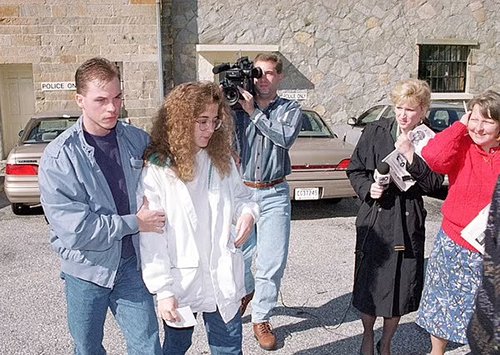
David and Susan Smith arrive at the Union County Sheriff's Office on October 27, 1994, two days after she claimed she had been carjacked (AP)
David and Susan Smith arrive at the Union County Sheriff’s Office on October 27, 1994, two days after she claimed she had been carjacked (AP)

Two days after she reported the carjacking, police subjected Smith to a polygraph test. The results revealed an inconsistency in where the crime took place. She initially told investigators that she had stopped for a traffic light at an otherwise empty intersection when the man forced himself into her car. However, police noted that that particular traffic signal would not have turned red unless another car was at the intersection on the cross street.

Susan Smith Confesses

Finally, on the ninth day, Smith confessed that she had let her car roll into John D. Long Lake with the boys strapped in their car seats inside.

Michael Daniel Smith and Alexander Tyler Smith (Reuters)

Smith’s motivation was supposedly to facilitate a relationship with a local wealthy married man named Tom Findlay, with whom she was having an affair. Shortly before the murders, he sent her a letter terminating their relationship, explicitly stating that he did not want children. Smith herself claimed there was no motive, that she was not in a “right state of mind.”

Detectives did not believe Smith’s story from the beginning and thought she had killed her boys. By the second day, police suspected she knew where the boys were and hoped they might still be alive. Investigators searched lakes and ponds in the area, including John D. Long Lake. However, they only looked as far as 30 feet from the shore, and it turned out that the car was 122 feet from the shoreline.

Susan Smith Tried and Convicted

Susan Smith went on trial on July 10, 1995. Her attorneys claimed she drove to the lake to kill herself, but her body willed itself out of the car. However, the prosecution believed she killed her sons to start a new life with her former lover. On July 22, the jury deliberated for only two and a half hours before returning two guilty verdicts.

Although Tommy Pope, the lead prosecutor in the case, argued vehemently for the death penalty, the jury ultimately voted against it. She received two concurrent life terms.

David Smith holds up a photo of Michael and Alex after his ex-wife was sentenced to two life terms for murder

Smith has hardly been a model prisoner. In 2000, authorities charged two corrections officials at the Camille Griffin Graham Correctional Institution with having sex with her. This resulted in her move to the Leath Correctional Institution in Greenwood, South Carolina, where she remains today (2025). She has also faced disciplinary action for possession and use of drugs.

Epilogue

Susan Smith had her first parole hearing in 2024. The Board of Pardons and Paroles denied her parole request.

Susan Smith's 2012 prison photo (South Carolina Department of Corrections)
Susan Smith’s 2012 prison photo (South Carolina Department of Corrections)

These books provide details of the murders, allowing you to delve further into Susan Smith’s crime. Beyond All Reason is David Smith’s (ghostwritten) account of his life with Susan. Sins of the Mother by Maria Eftimiades and Carla Thompson’s Susan Smith: Child Killer also examine the case.

Don’t Miss Out! Subscribe to the Newsletter

Subscribe to True Crime in the News, a monthly email newsletter examining recent news stories that will interest any true crime fan. The newsletter also summarizes the previous month’s blog posts. You won’t want to miss this. Join the newsletter mailing list today.
Mean Girls: A Brutal Murder, Killers Easily Found Out

We often take the sanctity of family for granted. Families are supposed to love and support each other, right? That was not the way things worked in this case. In 2012, a teenager conspired with her lesbian lover to have her mother slain. The “Mean Girls” murder reverberated throughout southern Texas in 2012.

The Mean Girls Murder

On July 19, 2012, a teenage girl called 911 from a neighbor’s house in the Houston suburb of Humble, Texas. Keri Murphy, 15 at the time, told the dispatcher that someone had broken into her home through the back door, and then she heard screaming. When police arrived, they found the body of 48-year-old Mary Ann Murphy dead from 73 stab wounds. Her attacker struck while Mary Ann was in bed asleep.

Mean Girls murder victim Mary Ann Murphy (Facebook)

Investigators almost immediately suspected Keri’s story. They did see a broken window at the back of the house, and it looked like burglars had ransacked the place. But the window opening was too small for someone to crawl through and too far from the back door to unlock it. Detectives concluded that someone had staged the scene and began looking close to home.

Mary Ann and her husband, Don, had tension in their marriage. Investigators even uncovered an affair between Mary Ann and a man named Mike. However, Don and Mike were able to prove they were not at the Murphy home when the murder occurred. Mary Ann and Don’s son, Scott, also had a solid alibi. That left Keri, and the truth about the Mean Girls murder was about to come out.

Mean Girls conspirator Keri Murphy (Oxygen)

Keri’s Interview Provides Clues to the Mean Girls Murder

As detectives interviewed her, Keri’s story shifted. Investigators also discovered that she had a tense relationship with her mother. In particular, Mary Ann objected to Keri’s association with Rebecca Keller, who was then 19. She felt it was inappropriate for her daughter to hang out with such an older girl. Then, she discovered that the two teens were lovers and insisted that Keri keep her distance from Rebecca.

Rebecca Keller was 19 when she stabbed Mary Ann Murphy to death (Harris County Sheriff’s Office)

Dissatisfied with Keri’s interview, detectives proposed that she take a polygraph test. Although inadmissible in court, police can use polygraphs as an investigative tool. Faced with taking the test, Keri changed her story again. Now, she insisted that she had arranged for a classmate, Zein Ahmed, to come to her home to intimidate Mary Ann with a knife and convince her to let Keri and Rebecca alone. On July 19, she opened the door for Ahmed and claimed to have later seen Ahmed repeatedly stabbing her mother.

Police soon arrested Ahmed, and he confirmed Keri’s account. However, detectives were still unsatisfied, as there were inconsistencies in his and Keri’s accounts. Ahmed’s parents insisted that he had been at home at the time of the murder. Police were subsequently able to verify that fact. They theorized that his false confession may have been because he did not fully understand (!) the consequences of the crime.

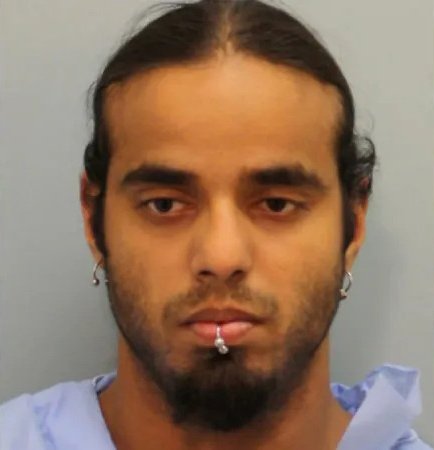
Ker Murphy falsely accused classmate Zein Ahmed of stabbing her mother (Harris County Sheriff's Office)
Ker Murphy falsely accused classmate Zein Ahmed of stabbing her mother (Harris County Sheriff’s Office)

The Mean Girls’ “Bunny Phone”

Detectives discovered that Keri had used a “burner” phone to communicate with Rebecca. Mary Ann had confiscated Ker’s regular phone after discovering explicit messages between the two. The Mean Girls referred to this phone as the “Bunny Phone;” “Bunny” was Rebecca’s nickname.

The “Bunny Phone” turned out to be a treasure trove of evidence. From the messages and phone calls Keri and Rebecca exchanged on the day and night of the murder, it was evident both were involved. Because Mary Ann’s blood had coagulated by the time police arrived, it was apparent that Keri and Rebecca took the time to stage the burglary.

Keri Murphy's older brother, Scott, was eliminated as a suspect (Dateline/NBC)
Keri Murphy’s older brother, Scott, was eliminated as a suspect (Dateline/NBC)

Police arrested Mean Girls Keri Murphy and Rebecca Keller and charged them with Mary Ann’s murder.

At first, police did not know which girl killed Mary Ann. But as Rebecca languished in jail awaiting trial, the two spoke regularly. They were unaware that law enforcement monitored and recorded all calls to and from the lockup. In one of their conversations, Keri mentioned that she had seen Rebecca stabbing her mother, indicating that Rebecca was the actual killer.

Epilogue

Both Mean Girls pleaded guilty in December 2012. Rebecca received a 60-year sentence, while Keri received 30 years. Rebecca is 32 (in 2024) and eligible for parole in 2042. Keri, 28 (in 2024), is eligible for parole in 2028.

NBC’s Dateline featured the Mean Girls case in an episode titled Down the Rabbit Hole, which first aired on October 11, 2024.

Don’t Miss Out! Subscribe to the Newsletter

Subscribe to True Crime in the News, a monthly email newsletter examining recent news stories that will interest any true crime fan. The newsletter also summarizes the previous month’s blog posts. You won’t want to miss this. Join the newsletter mailing list today.