
This week, I present an old case from Canada. In the summer of 1959, seven members of the Cook family were murdered in their home. The man eventually convicted of the crime and executed for it was the oldest son, Robert Cook. Although it would appear to be “case closed,” questions remain today.
The Cook Family is Murdered
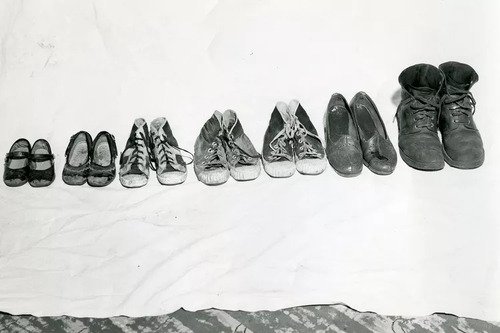
On June 28, 1959, the small prairie town of Stettler, Alberta, was rocked by the discovery of a crime so horrific it would leave an enduring scar on the province’s history. The entire Cook family—father Raymond, stepmother Daisy, and five children aged three to nine—was found murdered and hidden in a grease pit beneath their garage. The adults had been shot, while the children had been bludgeoned. All had been killed while in their nightclothes, suggesting they were attacked as they slept.
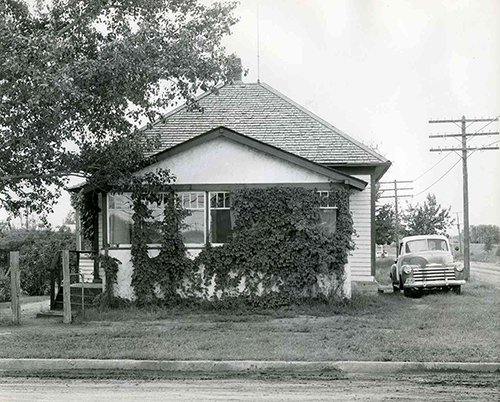
This brutal massacre stunned not only Stettler but the entire nation. The only suspect was 21-year-old Robert Raymond Cook, the eldest son of Raymond and his first wife, who had died a decade earlier. What followed was one of the most infamous and debated criminal cases in Canadian history. Troubling evidence, a dramatic escape, and a controversial execution marked the case.
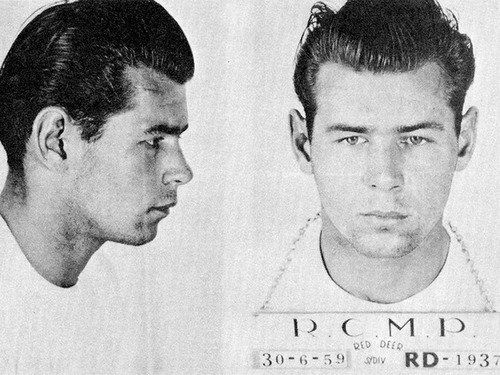
Robert Cook Had a Troubled Past
Robert Cook was no stranger to the justice system. Born in 1937, he began his criminal behavior at the age of ten and was in and out of institutions throughout his youth. Following his early release from jail in 1959, he returned to Stettler, supposedly to reconnect with his family. But his criminal tendencies quickly resurfaced.
In late June, he was arrested in Edmonton after attempting to trade the family station wagon using his father’s identification. Investigators found various family documents, children’s clothing, and household items in the vehicle. When questioned, Robert gave shifting explanations about his parents’ whereabouts, arousing further suspicion.
Concerned by his vague answers, police visited the Cook residence in Stettler. There, they found bloodstains and signs of violence. After a further search, officers made the grim discovery: the bodies of all seven family members stacked beneath the garage.
Robert Cook is Arrested, Escapes, and Captured Again
Robert Cook was immediately taken into custody. Though he was accused of killing all seven family members, the Crown chose to prosecute him only for the murder of his father, which was most likely a decision to streamline the legal process. Before trial proceedings could begin, Robert was sent to the Ponoka Mental Hospital for psychiatric assessment. However, he escaped the facility within days of his arrival on July 11, 1959.
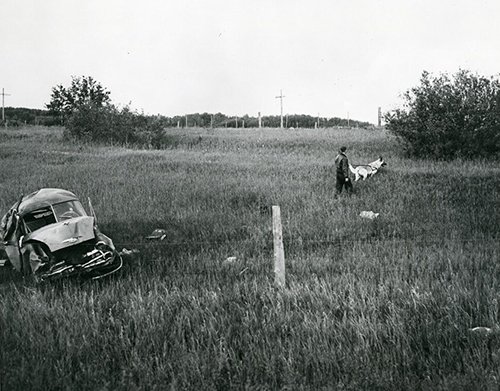
His escape sparked one of the largest manhunts in Alberta’s history. Police, military personnel, and even civilian volunteers scoured the countryside for weeks. The fugitive was finally located hiding in a pigsty near Bashaw, Alberta, about 60 kilometers from Stettler. He was arrested without incident and returned to custody, this time under far stricter conditions.
Robert Cook on Trial—Twice
Robert’s first trial was held in Red Deer in December 1959. The prosecution’s case rested heavily on circumstantial evidence: his inconsistent stories, his use of his father’s identity, and the suspicious items found in his car. There were no fingerprints, eyewitnesses, or direct forensic links placing him at the scene during the time of the murders. Nevertheless, the jury found him guilty. However, he won a retrial on appeal.
A second trial in 1960, this time in Edmonton, reached the same conclusion. The defense attempted to raise doubts about the timeline and the lack of physical evidence, but the verdict stood. Appeals to higher courts, including the Supreme Court of Canada, were all denied. In November 1960, Robert Raymond Cook was hanged at Fort Saskatchewan Provincial Gaol, the last person to be executed in Alberta.
Lingering Doubts About Robert Cook’s Guilt
To this day, Robert’s guilt remains a subject of debate. Supporters of the conviction argue that his behavior and possession of family belongings indicated involvement. Yet others have long contended that the case was built on inference rather than proof. The absence of a murder weapon, fingerprints, or a confession left room for doubt.
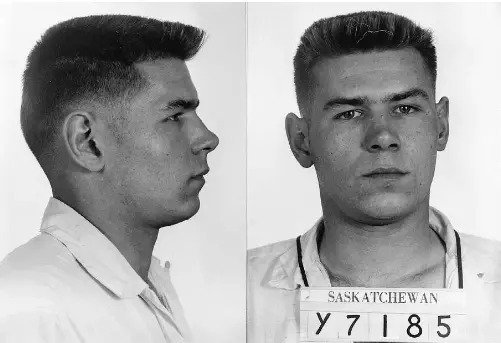
Robert himself steadfastly maintained his innocence until the end. In a poem written while on death row, he lamented what he saw as a miscarriage of justice:
“I sit here in my death cell, I know not why,
For the evidence proved me innocent, and that is no lie…”
Questions have also been raised about his mental state. A documented prison assault the year before the murders may have caused head trauma, possibly affecting his cognition. However, at the time, such factors were poorly understood and rarely taken into account in criminal proceedings.
The Legacy of Robert Cook
The Cook family murders are among the most harrowing crimes in Canadian history. The sheer brutality of the killings, coupled with the unanswered questions surrounding the case, has kept the story alive in Alberta’s collective memory. Plays, books, and documentaries have revisited the events, often focusing on the lingering uncertainties surrounding Robert Cook’s guilt.
The case also marked a turning point in Canada’s evolving views on capital punishment. In 1976, just sixteen years after Cook’s execution, the federal government abolished the death penalty for civilian crimes. While the Cook case was not the only reason, it undoubtedly contributed to public and political unease about the possibility of executing the wrong person.
Epilogue
The Cook family murders remain a haunting reminder of the complexities of justice. Although the courts rendered their verdict and the sentence was carried out, many Canadians, both then and now, have questioned whether justice was truly served. The enormity of the crime, the uncertainty of the evidence, and the finality of the punishment converge in a story that continues to provoke reflection more than six decades later.
Don’t Miss Out! Subscribe to the Newsletter
Subscribe to True Crime in the News, a monthly email newsletter that examines recent news stories of interest to true crime enthusiasts. The newsletter also summarizes the previous month’s blog posts. You won’t want to miss this. Join the newsletter mailing list today.