
Halloween was last week, and if you have young children, the holiday can be an enjoyable time. This week’s post is not about fun but presents a horrifying Halloween story that is sadly, unfortunately, true. In 1974, Ronald O’Bryan poisoned his own son to collect insurance money.
Ronald O’Bryan Goes Trick-Or-Treating
In 1974, Ronald O’Bryan lived with his wife, son Timothy, and daughter Elizabeth in Deer Park, Texas, a suburb of Houston. On October 31, he took his children trick-or-treating in nearby Pasadena, Texas. A neighbor and his two children accompanied them.

At one home, no one answered the door. Being impatient as children often are, the kids and the neighbor skipped off to the next house. Ronald, however, stayed behind. When he caught up with the group later, he had five 21-inch Pixy Stix. He said he got them from the house that did not answer the door. When the group returned home, he gave one Pixy Stix to Timothy, one to Elizabeth, and one each to the neighbor’s children. He gave the fifth Pixy Stix to a 10-year-old boy who attended his church.
Ronald O’Bryan Poisons Timothy
At bedtime, Timothy asked to eat some of the candy he had collected. O’Bryan said he chose the Pixy Stix. The boy had trouble getting the candy out of the paper tube, so O’Bryan helped him. When Timothy said the candy tasted bitter, O’Bryan gave him Kool-Aid to wash the taste away.
Almost immediately, Timothy complained of stomach pains. He ran to the bathroom, where he began vomiting before going into convulsions. The boy died on the way to the hospital, less than an hour after eating the candy.
Parents in Deer Park and surrounding neighborhoods panicked. Many turned in candy their children had collected to the police, fearing it had been poisoned.
The Poisoning Uncovered
Timothy’s autopsy determined he died from cyanide poisoning. The Pixy Stix he consumed contained enough potassium cyanide to kill two adults. Police recovered the other four Pixy Stix, and tests determined they had even more poison, enough potassium cyanide to kill three to four adults. All five Pixy Stix had been opened, about two inches of candy replaced with powdered potassium cyanide, and the paper tubes restapled shut.
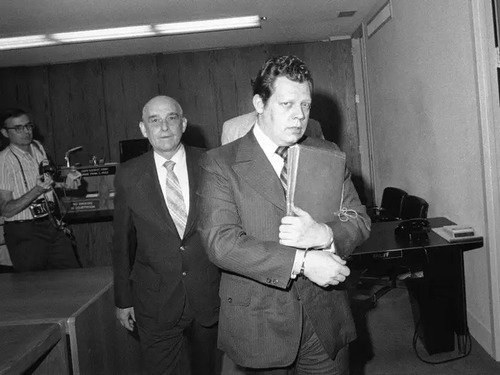
Police notified the parents of the boy from church about the poisoned candy. Hysterical, they raced upstairs to the child’s bedroom, where they found him fast asleep, clutching the Pixy Stix. He had been unable to undo the staples that sealed the wrapper.
Ronald O’Bryan Under Suspicion
Until then, police did not suspect Ronald O’Bryan. However, police learned that rain had forced him and his neighbor to visit only two streets. None of the homes on those streets gave out Pixy Stix. After walking the neighborhood several times with police, O’Bryan finally said he got the tainted candy from the house that did not answer the door. He claimed he had gone back to that house. A man opened the door, and a “hairy” arm handed him the five Pixy Stix.
An investigation determined that one Courtney Melvin owned the house in question. Melvin, an air traffic controller at William P. Hobby Airport, worked late that Halloween, arriving home around 11:00 p.m. Police cleared him as a suspect after more than 200 people verified he had been at work.
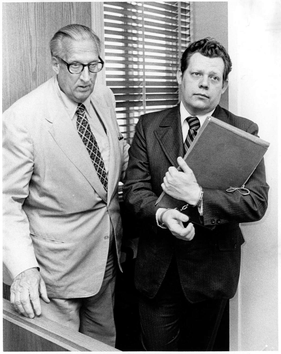
Investigators now turned their attention to Ronald O’Bryan. They learned he was over $100,000 in debt (about $640,000 in 2024). He also had a checkered employment history, having had 21 jobs in the ten years preceding Timothy’s death. Furthermore, he had taken out multiple insurance policies on his children’s lives, totaling about $60,000 (almost $384,000 in 2024).
Ronald O’Bryan Tried and Convicted
Police arrested O’Bryan on November 5, 1974. He was indicted on one count of capital murder and four counts of attempted murder. He pleaded not guilty to all five counts.
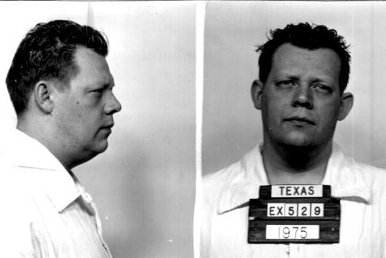
O’Bryan’s trial began on May 5, 1975. It did not go well for him. A chemist acquaintance testified that in the summer of 1973, O’Bryan had asked him about cyanide and what a fatal dose would be. Friends and co-workers also testified that in the months before Timothy’s death, O’Bryan showed an “unusual interest” in cyanide. O’Bryan’s wife testified that Timothy had not chosen the Pixy Stix voluntarily as O’Bryan had claimed. Instead, his father forced him to choose the Pixy Stix.
O’Bryan continued to maintain his innocence despite an impressive case for the prosecution. His defense leaned heavily on the old urban legend concerning a “mad poisoner” who hands out Halloween candy laced with poison or needles or candy apples with razor blades inside. However, no documented evidence of such a “mad poisoner” has ever turned up.
It took the jury only 46 minutes to return with a guilty verdict on all counts and 71 minutes to sentence O’Bryan to death in the electric chair.
Epilogue
O’Bryan’s wife filed for divorce shortly after his conviction.
This gruesome crime was fodder for the media, which dubbed O’Bryan “The Candyman” and “The Man Who Killed Halloween.”
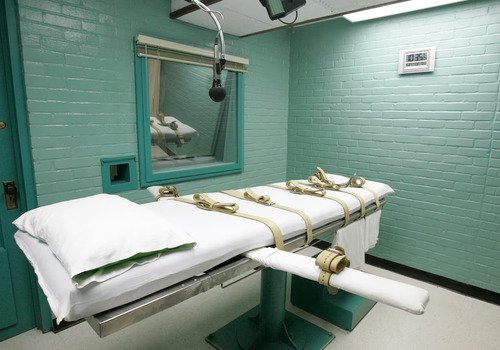
Ronald O’Bryan maintained his innocence to the end despite overwhelming evidence and his web of lies. He died by lethal injection, which had replaced electrocution, on March 31, 1984.
The poisoning of Timothy O’Bryan is discussed in David J. Skal’s 2002 book, Death Makes a Holiday: A Cultural History of Halloween.
Don’t Miss Out! Subscribe to the Newsletter
Subscribe to True Crime in the News, a monthly email newsletter examining recent news stories that will interest any true crime fan. The newsletter also summarizes the previous month’s blog posts. You won’t want to miss this. Join the newsletter mailing list today.