
This week’s blog post examines an unsolved murder case from a century ago, the Hall-Mills murder case. The Hall-Mills murders remain one of the most sensational and enduring mysteries of the early twentieth century. The case drew national attention with its combination of forbidden romance, small-town intrigue, and a shocking double homicide. The events, centered in New Brunswick, New Jersey, in 1922, involved an Episcopal minister, his choir singer lover, and a whiff of scandal that would haunt American popular culture for decades.
The Hall-Mills Murders and the Victims
On the night of September 14, 1922, the bodies of Reverend Edward Wheeler Hall and Mrs. Eleanor Reinhardt Mills were discovered beneath a crabapple tree. The tree stood on an abandoned farm just outside New Brunswick, New Jersey. Reverend Hall, aged forty-one, was the rector of St. John the Evangelist Episcopal Church. He was known as a dignified and charismatic figure in the community, a man whose social standing was enhanced by his marriage to Frances Stevens Hall, a woman of considerable wealth and local influence.

Eleanor Mills, aged thirty-four, was a married woman with two children and sang in Hall’s church choir. Her husband, James Mills, worked as a janitor at the same church. By all accounts, Eleanor was vivacious, romantic, and openly affectionate toward the minister. Their relationship, while theoretically discreet, had become an open secret among parishioners and townspeople. Rumors of late-night meetings and exchanged letters hinted at a deep emotional entanglement far exceeding innocent friendship.
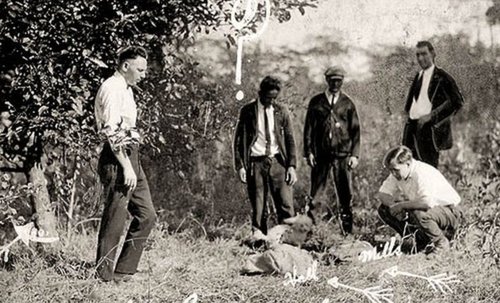
The morning after the murders, a local couple walking near De Russey’s Lane stumbled upon a grisly scene. Reverend Hall lay on his back with his hat covering his face, while Mrs. Mills was beside him, her head resting on his arm. Both had been shot in the head. Torn love letters, evidently written by Eleanor to Hall, were scattered around the bodies. The Reverend’s calling card was placed neatly at his feet, a curious detail that pointed to deliberate staging. Mrs. Mills’s throat had been slashed and her tongue cut out, a gruesome gesture many saw as a symbolic punishment for gossip or betrayal.

The tableau was theatrical, almost ritualistic, and the initial investigation quickly drew press attention. Within days, reporters from New York and beyond descended on New Brunswick. What might have been a provincial tragedy became a national sensation. Headlines portrayed the murders as a story of love, jealousy, and retribution among the respectable classes.
The Investigation and Early Theories
The unexpected media frenzy overwhelmed law enforcement. Local police bungled the early investigation by failing to secure the scene, allowing souvenirs to be taken, and overlooking crucial evidence. The bodies were moved before a thorough forensic analysis could be performed. The result was an investigative fiasco that complicated subsequent efforts to find the truth.
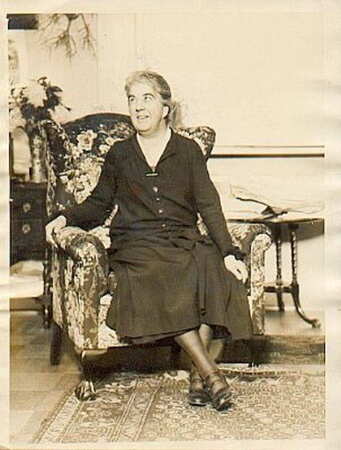
Suspicion quickly turned toward Reverend Hall’s wife, Frances, and her brothers, Henry and William Stevens. The Stevens family was socially prominent, and rumors suggested they disapproved of the minister’s affair with Eleanor Mills. The press cast Frances Hall as a jealous wife, shielded by privilege and family influence. Anonymous witnesses claimed to have seen two men and two women arguing near the murder scene that night before gunshots rang out. Although uncorroborated, these reports fed public imagination and pointed toward a domestic confrontation turned deadly.
Another theory implicated local gossipers who may have known too much about the affair. Yet, no solid evidence emerged despite repeated inquiries. The first investigation concluded without any arrests, leaving the public unsatisfied and the case unresolved.
Renewed Interest in the Hall-Mills Murders
Four years later, in 1926, surprise testimony breathed new life into the case. A woman named Jane Gibson, nicknamed “the Pig Woman” because she raised pigs near the crime scene, claimed to have witnessed the murders. She described seeing four shadowy figures arguing by flashlight before hearing gunfire and a woman’s scream. Her testimony, though inconsistent and theatrical, prompted authorities to reopen the case and arrest Frances Hall and her brothers.
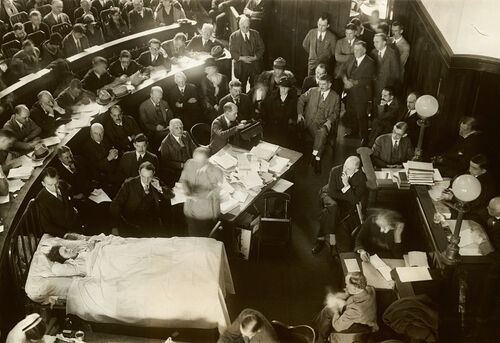
The trial, held in Somerville, New Jersey, became one of the decade’s great spectacles. Newspapers framed it as a morality play of sex, money, and murder. Reporters chronicled every detail of Frances Hall’s demeanor, including her mourning attire and her stoic composure in court. The defense, focused on discrediting Jane Gibson, portrayed her as unstable and unreliable. Moreover, her story had evolved over time, and her dramatic appearance (she was brought to court on a stretcher due to illness) further blurred the line between testimony and theater.
The prosecution failed to establish its case, despite the circumstantial evidence and public suspicion. The jury acquitted all defendants after a trial lasting more than a month. The verdict provoked both relief among those who saw the evidence as insufficient and outrage among those convinced that wealth and influence had shielded the guilty.
Aftermath of the Hall-Mills Case
Newspapers of the 1920s, eager for sensational copy, cast the affair into a morality tale about hypocrisy among the respectable and the corrupting power of illicit love. The case illustrated the growing power of mass media in shaping public perception of crime.
The bungled investigation provided a textbook example of how not to handle a crime scene. Criminologists have cited the case in discussions of forensic procedure, emphasizing the dangers of contamination and the need for professional crime-scene management. The case also underscored the limitations of circumstantial evidence and unreliable witnesses in high-profile trials.
Epilogue
The Hall-Mills murders remain unsolved. Theories abound: the jealous wife, an unknown assailant, or even conspirators acting on behalf of the Stevens family. None of these has been proven. The story endures because it embodies timeless themes of love and betrayal, privilege and justice, secrecy and scandal.
You can read more about the Hall-Mills murder case in The Hall-Mills Murder Case: The Minister and the Choir Singer. This is an older book by activist attorney William Kunstler that examines the case in detail. Kunstler concludes by presenting his own theory of the crime.
Another book about the crime is Blood & Ink: The Scandalous Jazz Age Double Murder That Hooked America on True Crime by Joe Pompeo. It looks at the influence the tabloid press had on the case.
Don’t Miss Out! Subscribe to the Newsletter
Subscribe to True Crime in the News, a monthly email newsletter that examines recent news stories of interest to true crime enthusiasts. The newsletter also summarizes the blog posts from the previous month. You won’t want to miss this. Join the newsletter mailing list today.